
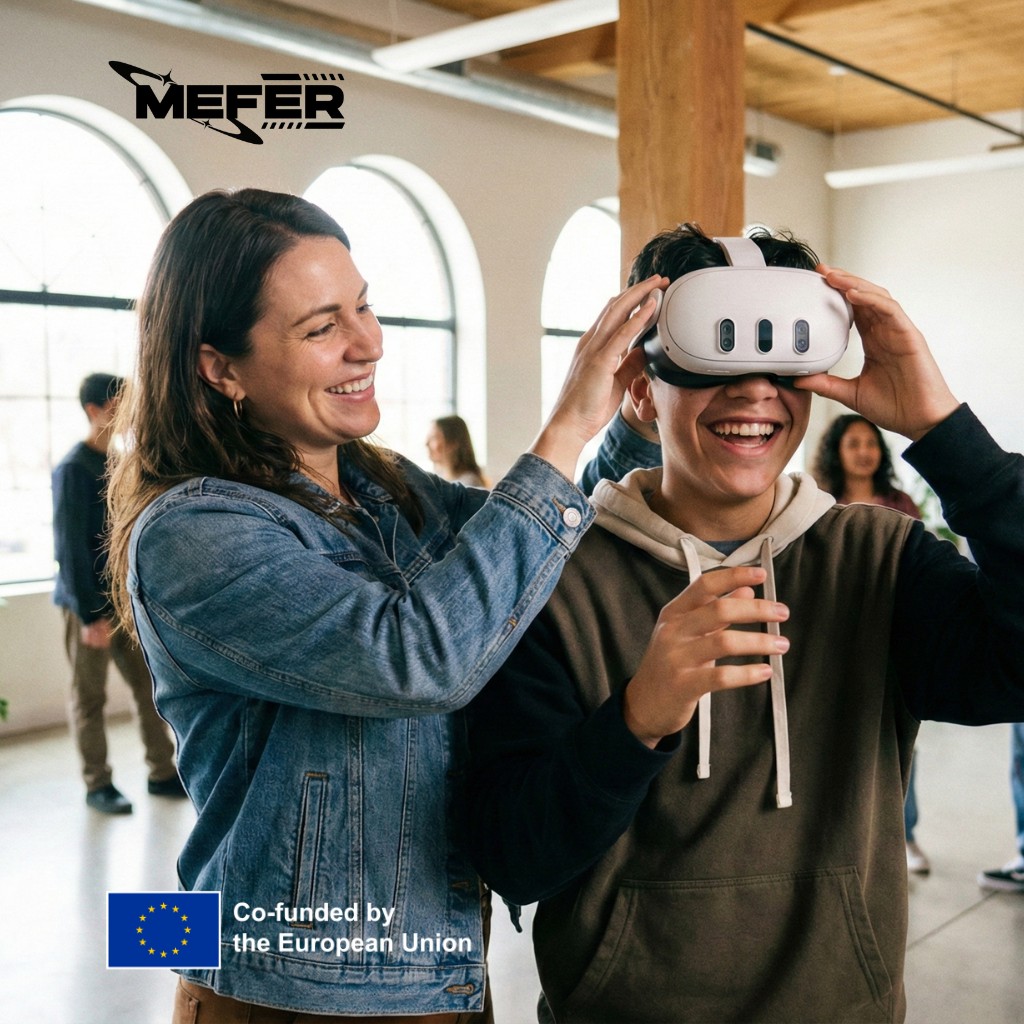
A new European study reveals that while youth workers understand immersive technologies, most haven’t used them yet—and they’re eager to learn.
The Digital Shift Is Here—But Are We Keeping Up?
Virtual reality headsets, augmented reality apps, and metaverse platforms are no longer science fiction. They’re in our homes, schools, and increasingly, in the spaces where young people spend their time. But here’s the question: Are youth workers equipped to guide young people through these digital landscapes?
To find out, the MEFER project—a 24-month Erasmus+ initiative involving six partner organizations across Europe—conducted a comprehensive needs assessment. We spoke with 216 youth workers from Norway, Spain, Croatia, Serbia, Poland, and Türkiye through surveys, focus groups, and in-depth interviews.
The findings? Eye-opening.
The Gap Between Knowing and Doing
Here’s the surprising truth: Most youth workers know what VR and AR are, but they’ve never actually used them in their work.
- 67% of respondents said they have never used immersive technologies with young people
- Only 6% consider themselves experts in virtual reality
- The biggest skill gap? Creating content for virtual environments
Youth workers are aware of the potential. They understand the buzzwords. But when it comes to practical application, there’s a significant gap.
“We know these tools exist. We see young people using them. But we don’t have the training or resources to bring them into our programs.”
— Focus group participant
What’s Holding Us Back?
Our research identified three main barriers:
1. Cost and Infrastructure
VR headsets aren’t cheap. Neither is reliable high-speed internet. For youth organizations—especially those in rural areas or working with limited budgets—the financial barrier is real.
2. Lack of Educational Content
While gaming and entertainment content is abundant, purpose-driven educational materials are scarce. Youth workers need content that’s curriculum-aligned, age-appropriate, and designed for learning—not just play.
3. Safety and Ethical Concerns
This was a major theme across all countries. Youth workers worry about:
- Cyberbullying in virtual spaces
- Social isolation and detachment from reality
- Data privacy and content monitoring
- Physical effects like eye strain and motion sickness
These aren’t unfounded fears. They reflect a genuine concern for young people’s wellbeing in digital environments.
The Good News: Youth Workers Want to Learn
Despite the challenges, the enthusiasm is there. When asked about training interests:
- Risk awareness topped the list (3.72 out of 5)
- Digital ethics and cybersecurity came second (3.61 out of 5)
- Cultural sensitivity and inclusion ranked third (3.60 out of 5)
And here’s what youth workers want most from training:
“Immersive technology tools should be taught through hands-on practical training.”
— Highest-rated statement in our survey (5.05 out of 6)
The message is clear: Don’t just tell us about these technologies. Let us experience them.
Opportunities We Can’t Ignore
Immersive technologies aren’t just about flashy gadgets. When used thoughtfully, they can:
✅ Break down geographical barriers — A young person in a rural village can virtually visit a museum in Paris
✅ Support diverse learners — Visual and experiential learning helps those who struggle with traditional methods
✅ Build real-world skills — From job interview simulations to conflict resolution scenarios
✅ Foster inclusion — Creating safe spaces where marginalized youth can participate on equal footing
The potential is enormous. What’s needed now is the bridge between potential and practice.
What MEFER Is Doing About It
Based on these findings, the MEFER project is developing:
📚 A comprehensive curriculum that goes beyond technical skills to include digital ethics, safety protocols, and inclusive design
🎮 A 3D Virtual Learning Platform where youth workers can practice in safe, simulated environments
🛠️ Practical resources including lesson plans, activity guides, and ready-to-use templates
🌍 International workshops to test, refine, and share best practices across borders
Our goal isn’t just to teach youth workers how to use VR headsets. It’s to help them become confident digital mentors who can guide young people safely and creatively through the evolving digital landscape.
The Bottom Line
The digital transformation of youth work isn’t coming—it’s already here. The question is whether we’ll be proactive guides or passive observers.
Our research shows that youth workers are ready to learn. They understand the risks and the opportunities. What they need is practical training, quality resources, and institutional support.
That’s exactly what we’re building together.
Want to learn more about the MEFER project or get involved? Contact us or follow our journey on social media.
#MEFER #YouthWork #DigitalTransformation #VR #Metaverse #ErasmusPlus
This blog post summarizes findings from the MEFER Needs Assessment Report (September 2025), based on qualitative and quantitative research with 216 youth workers across six European countries.
MEFER – Metaverse Futures: Education beyond Realms is co-funded by the Erasmus+ Programme of the European Union.